


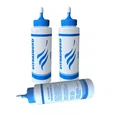


Hey there! As a supplier of Blood Collection Pens, I often get asked about the needle gauges commonly used in these nifty devices. So, let's dive right into it and break down everything you need to know.
First off, what exactly is a needle gauge? Well, it's a way to measure the diameter of a needle. The higher the gauge number, the smaller the needle's diameter. This might seem a bit counterintuitive at first, but once you get the hang of it, it makes perfect sense.
Now, when it comes to Blood Collection Pens, there are a few needle gauges that are more commonly used than others. The most popular ones are 21G, 22G, and 23G. Let's take a closer look at each of these.
The 21G needle is like the workhorse of blood collection. It has a relatively large diameter, which means it can draw blood quickly. This is great when you need to collect a large volume of blood or when the patient's veins are deep or difficult to access. However, because of its size, it can be a bit more painful for the patient. But hey, sometimes you gotta do what you gotta do to get the job done!
Next up is the 22G needle. This is a bit smaller than the 21G, but it's still a very popular choice. It strikes a good balance between speed and patient comfort. It can draw blood at a decent rate, and most patients find it less painful than the 21G. If you're looking for a versatile needle that works well in most situations, the 22G is a solid option.
Finally, we have the 23G needle. This is the smallest of the three and is often used for patients with small or fragile veins, like children or the elderly. It's the least painful option, but it also takes a bit longer to draw blood. So, if you're dealing with a patient who's particularly sensitive or has delicate veins, the 23G is definitely the way to go.
But how do you decide which needle gauge to use? Well, it depends on a few factors. First and foremost, you need to consider the patient's veins. If they're large and easy to access, you might be able to get away with a 21G or 22G needle. But if they're small or fragile, a 23G needle is probably your best bet.
You also need to think about the volume of blood you need to collect. If you're only taking a small sample, a 23G needle might be sufficient. But if you need to collect a larger amount, you'll probably want to use a 21G or 22G needle to speed up the process.
Another factor to consider is the patient's pain tolerance. Some people are more sensitive to needles than others, so you might need to adjust the needle gauge accordingly. If you're unsure, it's always a good idea to ask the patient how they feel and go from there.
Now, let's talk about the importance of using the right needle gauge. Using the wrong gauge can lead to a number of problems, such as difficult blood collection, hemolysis (the breakdown of red blood cells), and patient discomfort. So, it's really important to choose the right gauge for the job.
As a Blood Collection Pen supplier, we understand the importance of providing high-quality needles that are the right gauge for the task. That's why we offer a range of Blood Collection Pens with different needle gauges to meet the needs of our customers. Whether you're a healthcare professional looking for a reliable blood collection solution or a patient in need of a pain-free experience, we've got you covered.
In addition to our Blood Collection Pens, we also offer a variety of other products that are essential for blood collection, such as Disposable Centrifuge Tubes and Disposable Vacuum Blood Collection Tubes. These products are designed to work together seamlessly to make the blood collection process as efficient and painless as possible.
So, if you're in the market for a Blood Collection Pen or any other blood collection products, look no further. We're committed to providing our customers with the highest quality products at competitive prices. And if you have any questions or need help choosing the right products for your needs, our friendly and knowledgeable customer service team is always here to assist you.


In conclusion, the needle gauge commonly used in Blood Collection Pens depends on a variety of factors, including the patient's veins, the volume of blood needed, and the patient's pain tolerance. The most popular gauges are 21G, 22G, and 23G, each with its own advantages and disadvantages. As a Blood Collection Pen supplier, we offer a range of products with different needle gauges to meet the needs of our customers. So, if you're looking for a reliable and pain-free blood collection solution, be sure to check out our Blood Collection Pens.
If you're interested in learning more about our products or would like to place an order, please don't hesitate to reach out. We'd love to hear from you and help you find the perfect blood collection solution for your needs.
References
- Medical textbooks on phlebotomy and blood collection techniques.
- Professional guidelines from healthcare organizations regarding blood collection procedures.