


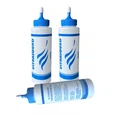


Hey there, fellow lab enthusiasts! As a supplier of Laboratory Pipette Tips, I often get asked about whether there are any special pipette tips for RNA work. Well, let's dive right into this topic and find out!
RNA, or ribonucleic acid, is super important in biological research. It plays a key role in various cellular processes, like gene expression and protein synthesis. But working with RNA can be a real pain in the neck because it's so unstable and easily degraded by RNases, which are enzymes that break down RNA. That's why having the right pipette tips is crucial when dealing with RNA.
First off, let's talk about the material. Special pipette tips for RNA work are usually made from high - quality polypropylene. This material is great because it has low RNase and DNase contamination levels. RNases can quickly destroy your precious RNA samples, and DNase can contaminate your RNA with DNA, which can mess up your experiments. So, these polypropylene tips are designed to minimize the risk of such contamination.
Another important feature is the tip's design. For RNA work, you'll want tips with a fine and precise tip end. This allows for accurate and reproducible pipetting, which is essential when you're working with small volumes of RNA samples. A bad tip design can lead to inconsistent pipetting, and that can throw off all your results.
Some pipette tips for RNA work also come with a filter. These filter tips are a game - changer. The filter acts as a barrier, preventing aerosols and liquid from entering the pipette shaft. This not only protects your pipette from contamination but also stops any potential cross - contamination between different samples. When you're working with RNA, cross - contamination can give you false results, so these filter tips are a must - have.
Now, let's touch on some other related products that you might need in your lab. If you're doing blood - related RNA research, you might be interested in a Blood Collection Pen. It's a handy tool for collecting blood samples in a more efficient and less painful way. And for viewing your RNA - related samples under a microscope, Laboratory Glass Microscope Slide is a basic but essential item. You can also use Disposable Vacuum Blood Collection Tube to collect and store blood samples properly.
When it comes to choosing the right pipette tips for RNA work, you also need to consider the volume range. Different experiments require different volumes of RNA samples. Some tips are designed for very small volumes, like 0.1 - 10 μL, while others are better for larger volumes, up to 1000 μL. Make sure you pick the right volume range for your specific experiment.
Quality control is another big deal. As a supplier, we put our pipette tips through strict quality control measures. We test them for RNase and DNase contamination, tip accuracy, and precision. This ensures that you're getting a high - quality product that you can trust for your RNA work.


Cost is also a factor that you might be thinking about. Special pipette tips for RNA work can be a bit more expensive than regular ones. But think about it this way: if you use low - quality tips and your experiment fails because of contamination or inaccurate pipetting, you'll end up wasting a lot more time and money in the long run. So, it's worth investing in good - quality pipette tips for your RNA work.
Let's talk about storage. Once you've got your pipette tips, you need to store them properly. Keep them in a clean and dry environment, away from sources of RNase contamination. Some tips come in sealed boxes, which helps to keep them clean until you're ready to use them.
In addition to the features I've mentioned, some pipette tips are also designed to be compatible with specific pipette models. It's important to make sure that the tips you choose are a good fit for your pipettes. Otherwise, you might have problems with proper seating and accurate pipetting.
When you're working with RNA, it's also a good idea to use a dedicated set of pipette tips. This reduces the risk of cross - contamination between different types of samples. For example, if you're working on multiple RNA projects, use different sets of tips for each project.
Now, I know some of you might be thinking about the environmental impact. We're aware of this concern, and many of our pipette tips are designed with sustainability in mind. We're always looking for ways to reduce our environmental footprint while still providing high - quality products.
If you're new to RNA work, it might be a good idea to start with a sample pack of our pipette tips. This way, you can test them out and see if they meet your requirements before making a larger purchase.
In conclusion, there are definitely special pipette tips for RNA work. They have unique features like low contamination levels, precise tip design, and optional filters that make them ideal for handling RNA samples. If you're in the market for pipette tips for your RNA research, we've got you covered. We offer a wide range of high - quality pipette tips that are perfect for all your RNA work needs.
If you're interested in learning more about our Laboratory Pipette Tips or want to discuss your specific requirements, don't hesitate to reach out. We're here to help you make the best choice for your lab. Whether you're a small research lab or a large - scale biotech company, we can provide you with the right products at a competitive price. So, let's start a conversation and see how we can work together to make your RNA research a success!
References
- Alberts, B., Johnson, A., Lewis, J., Raff, M., Roberts, K., & Walter, P. (2002). Molecular Biology of the Cell. Garland Science.
- Sambrook, J., & Russell, D. W. (2001). Molecular Cloning: A Laboratory Manual. Cold Spring Harbor Laboratory Press.