




Hey there! As a hypodermic supplier, I often get asked about how hypodermic syringes work. It's a pretty cool topic, and I'm excited to share the ins and outs of these handy medical tools with you.
Let's start with the basic parts of a hypodermic syringe. You've got the barrel, which is the long, hollow tube that holds the liquid. It's usually made of plastic these days, but you can still find some glass ones out there. The barrel has markings on it, so you can measure the exact amount of liquid you're using.
Then there's the plunger. This is the part you push or pull to move the liquid in and out of the syringe. It's a rod with a rubber or silicone stopper on the end that fits snugly inside the barrel. When you pull the plunger back, it creates a vacuum inside the barrel, which sucks the liquid in. When you push the plunger forward, it forces the liquid out through the needle.

Speaking of the needle, it's a crucial part of the syringe. Needles come in different sizes and gauges. The gauge refers to the thickness of the needle. A smaller gauge number means a thicker needle. For example, a 16-gauge needle is thicker than a 22-gauge needle. The size of the needle you choose depends on what you're using the syringe for. If you're injecting a thick liquid or giving an intramuscular injection, you might need a thicker needle. For a subcutaneous injection or a more delicate procedure, a thinner needle would be better.
Now, let's talk about how a hypodermic syringe actually works in practice. When you're going to use a syringe, the first step is to draw up the liquid. You do this by attaching the needle to the syringe (usually it just screws on), then inserting the needle into the vial or container with the liquid. Make sure the tip of the needle is in the liquid, and then slowly pull back on the plunger. As you do this, the liquid will start to fill the barrel of the syringe. You can watch the markings on the barrel to make sure you're getting the right amount.
Once you've drawn up the correct amount of liquid, you need to get rid of any air bubbles in the syringe. Air bubbles can cause problems if they get injected into the body. To remove the air bubbles, hold the syringe with the needle pointing up and gently tap the barrel. The air bubbles will rise to the top. Then, slowly push the plunger up a little bit until the air bubbles are pushed out of the needle.
Next, it's time for the injection. You'll need to clean the area of the skin where you're going to inject the liquid with an alcohol swab. This helps to prevent infection. Then, depending on the type of injection (subcutaneous, intramuscular, or intravenous), you'll insert the needle at the appropriate angle and depth. For a subcutaneous injection, you usually insert the needle at a 45-degree angle just under the skin. For an intramuscular injection, you insert it at a 90-degree angle into the muscle. And for an intravenous injection, it's a bit more complicated and usually done by a trained medical professional.
After you've inserted the needle, you slowly push the plunger forward to inject the liquid. Once all the liquid is injected, you quickly pull the needle out and apply a little pressure to the injection site with a cotton ball or gauze to stop any bleeding.
Hypodermic syringes are used in a wide range of medical situations. They're used for giving medications, vaccinations, drawing blood, and even for some more specialized procedures. For example, in a hospital setting, you might see them used with Blood Infusion Bag for blood transfusions. The syringe can be used to draw the blood from the bag and then inject it into the patient's vein.
Another common use is with Disposable Blood Transfusion Set. These sets are designed to make the process of blood transfusion safer and more efficient. The syringe can be part of this system, helping to control the flow of blood.
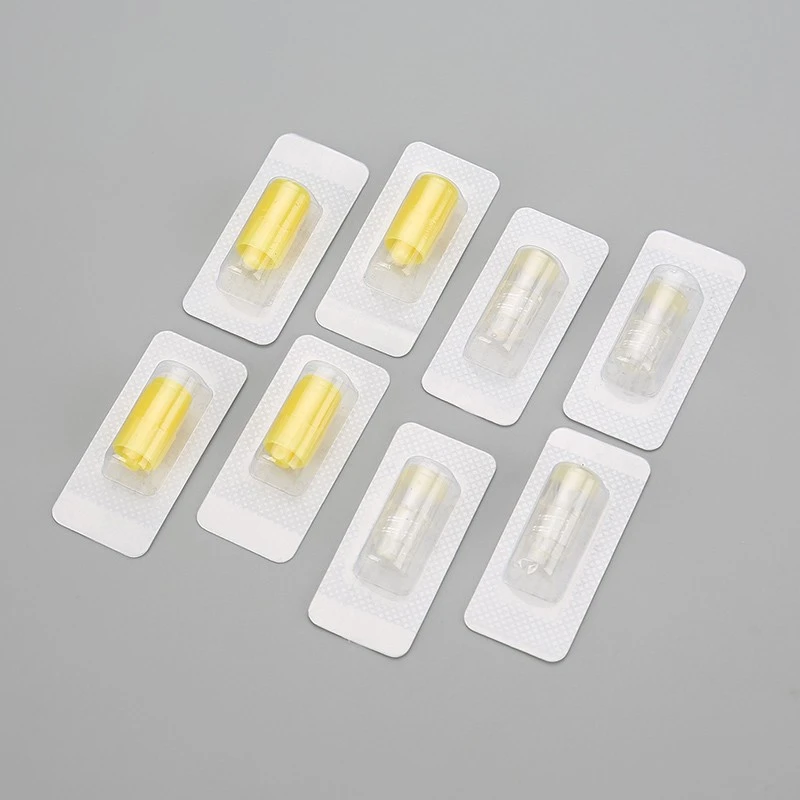
And then there's the Luer Lock Heparin Cap. This is a small device that can be attached to the end of a syringe or a catheter. It helps to prevent blood from clotting in the tubing and keeps the system sterile.
As a hypodermic supplier, I know how important it is to have high-quality syringes and related products. We work hard to source the best materials and manufacture syringes that are safe, reliable, and easy to use. Whether you're a healthcare professional in a hospital, a clinic, or a home caregiver, having the right hypodermic equipment can make a big difference in patient care.
If you're in the market for hypodermic syringes or any of the related products I've mentioned, I'd love to talk to you. We offer a wide range of products at competitive prices, and we're committed to providing excellent customer service. Don't hesitate to reach out to start a conversation about your procurement needs.
References
- Medical Device Technology: Principles and Applications.
- Textbook of Clinical Nursing Skills.